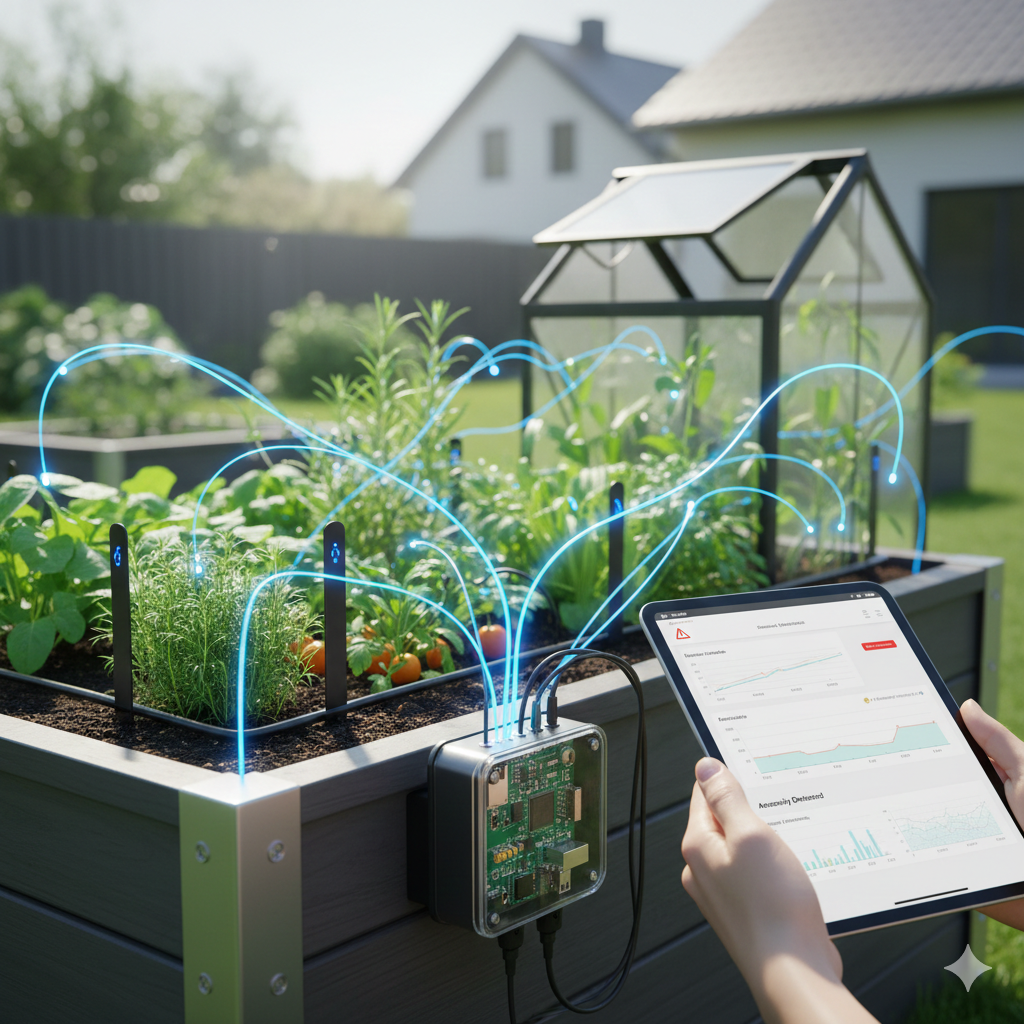
Wanting good food led to cooking. Cooking led to wanting better ingredients. Better ingredients led to growing my own food. And growing food efficiently requires monitoring: soil moisture, temperature, light levels, humidity. Manual checks are tedious and easy to forget.
This is the story of Tendrilio: an offline-first garden automation system currently in development.
The Problem with Commercial Solutions
Smart garden products exist, but they share common flaws:
- Cloud Dependency: No internet = no monitoring
- Subscriptions: Monthly fees for your own data
- Vendor Lock-In: Proprietary sensors, apps, and protocols
- Limited Customization: Can't add sensors they don't sell
- Privacy Concerns: Your growing patterns aren't their business
I wanted something that:
- Works offline (greenhouses often have poor WiFi)
- Uses standard hardware (ESP32, common sensors)
- Stores data locally (my data, my server)
- Scales from one sensor to dozens
- Automates responses (if dry, irrigate)
Architecture Design
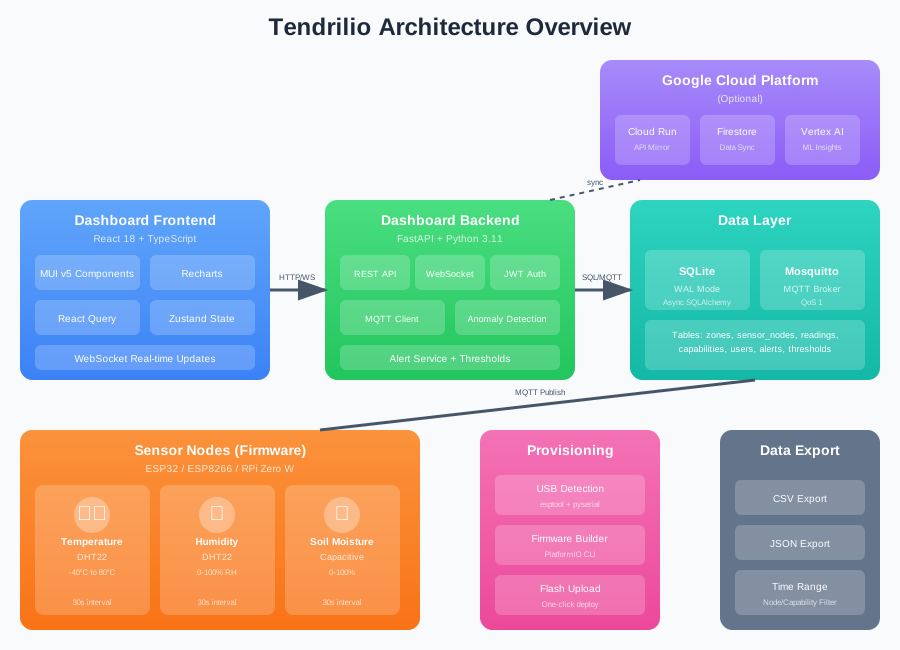
System Components
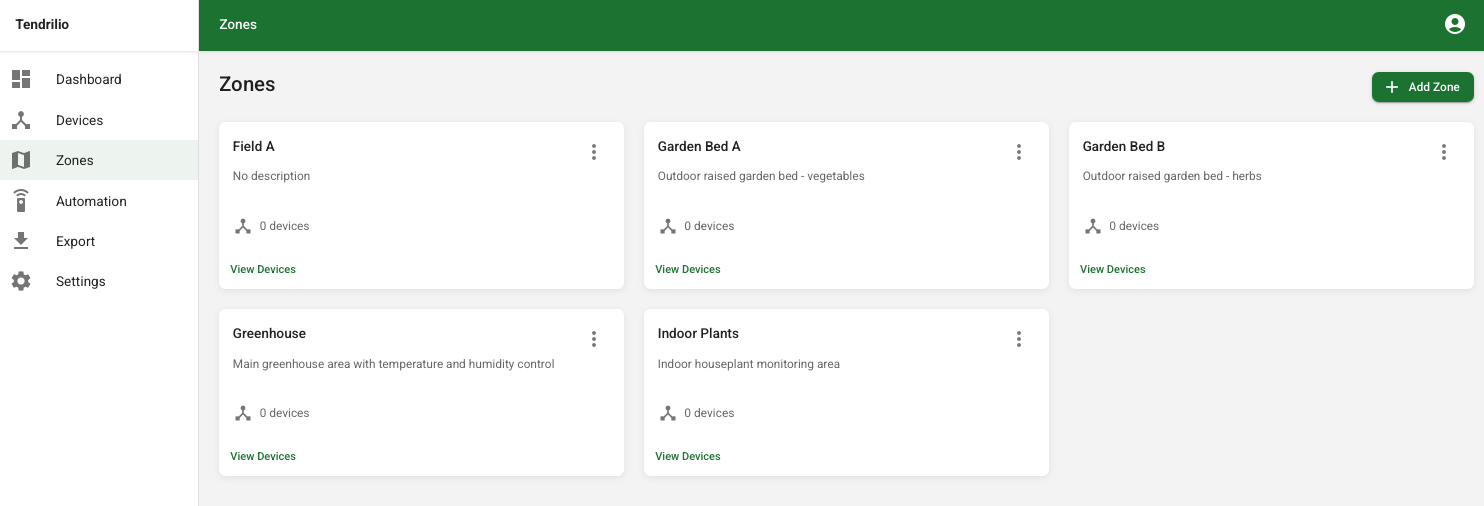
Central Dashboard
A Raspberry Pi runs the entire control plane:
- Frontend: React dashboard accessible from any device
- Backend: FastAPI handling API requests and MQTT messages
- Broker: Mosquitto for sensor communication
- Database: SQLite for historical data (simple, reliable, portable)
Sensor Nodes
ESP32 microcontrollers placed throughout the garden:
- Cheap (~$5 each)
- WiFi built-in
- Low power (solar viable)
- Arduino-compatible
Each node publishes readings to MQTT topics like tendrilio/zone1/soil_moisture.
Supported Sensors
| Sensor Type | Use Case |
|---|---|
| Soil Moisture | Irrigation triggers |
| Temperature | Frost alerts, ventilation |
| Humidity | Disease prevention |
Key Features
Device Provisioning
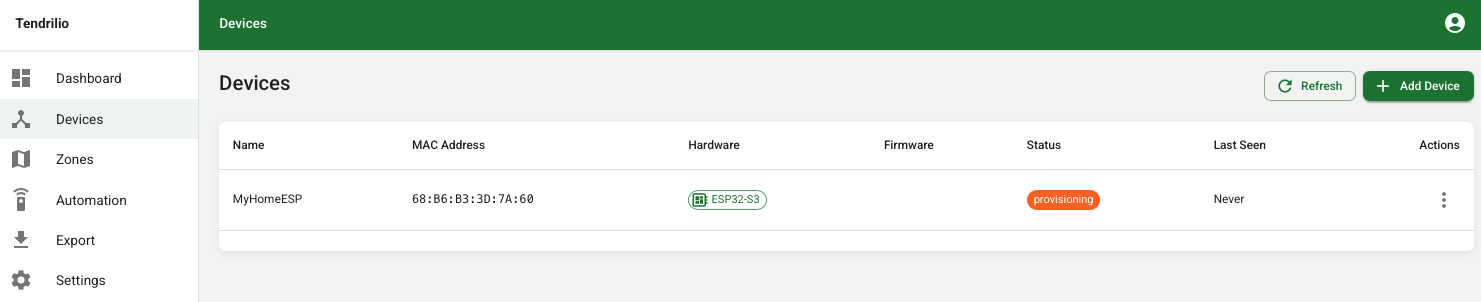
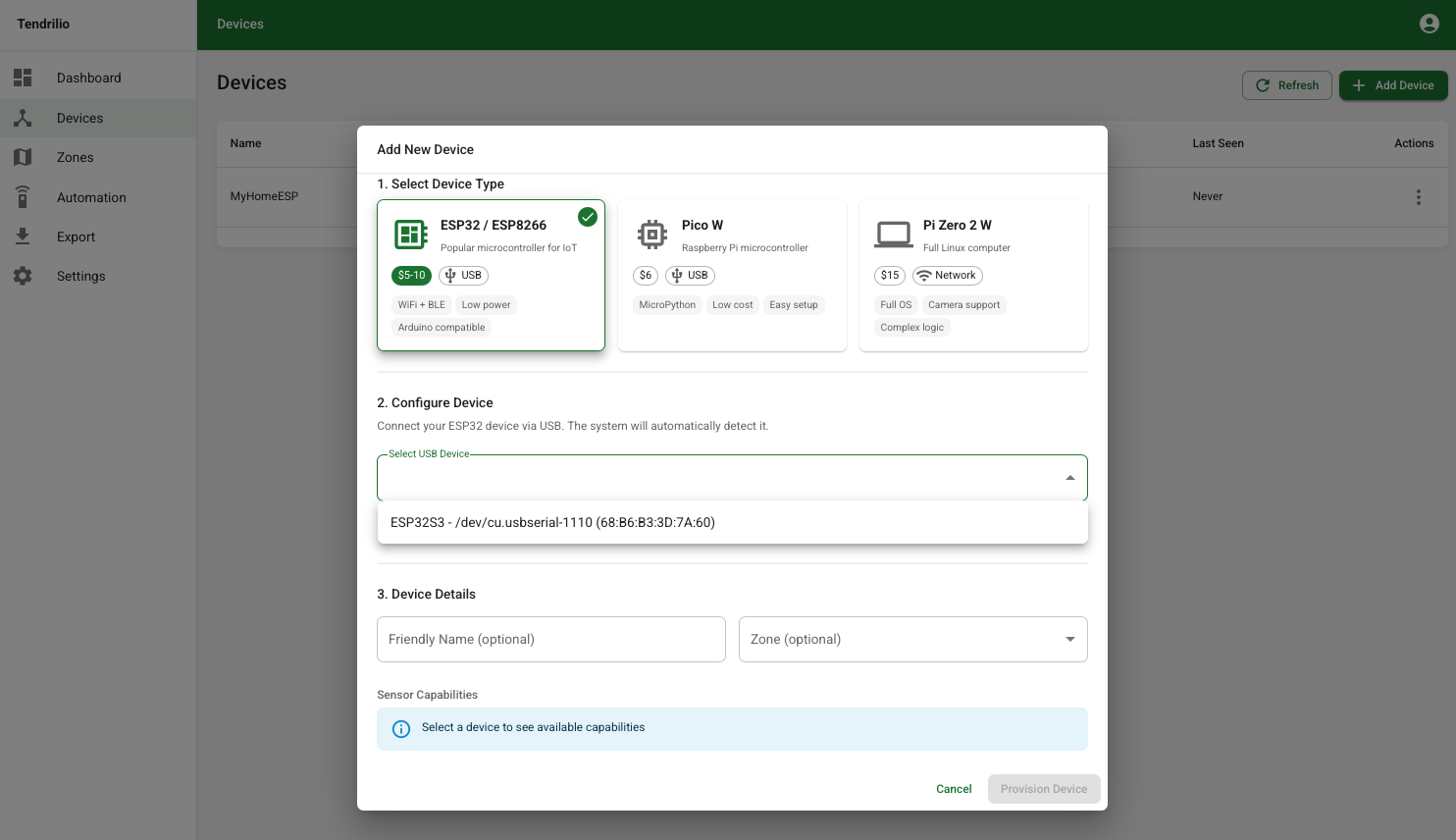
New sensors shouldn't require command-line setup. The dashboard includes a USB provisioning wizard:
- Plug in the new ESP32
- Dashboard detects it automatically
- Configure WiFi credentials and sensor type
- Flash firmware
- Done. The sensor appears in the dashboard.
Automation Rules
Simple condition-action rules:
IF zone1.soil_moisture < 30%
AND NOT rain_expected_24h
AND current_hour BETWEEN 6 AND 8
THEN activate_irrigation(zone1, duration=10min)
COOLDOWN 4 hours
Rules support:
- Multiple conditions (AND/OR)
- Time windows
- Cooldown periods (prevent oscillation)
- Conflict resolution (don't irrigate during rain)
Anomaly Detection
Sensors fail. Wires get chewed by critters. Statistical analysis helps catch problems:
- Z-score analysis of readings
- Health scores per sensor
- Alerts when values are statistically unlikely
If a moisture sensor suddenly reads 0% when others read 40%, something's wrong.
Data Export
All historical data is exportable as CSV or JSON. Your data isn't trapped.
Current Status
Software: Largely complete
- 18,000+ lines of code
- Full dashboard implementation
- Backend API with 18 route modules
- Firmware for ESP32, ESP8266, and Raspberry Pi Pico W
Hardware: In progress
- Deciding which sensors to prioritize
- A few more microcontrollers to select and order
- Sensors pre-selected but not yet ordered
- 3D-printed enclosures would be ideal, but no printer available yet
Next Steps:
- Assemble first sensor nodes
- Deploy in test environment
- Calibration and tuning
- Long-term reliability testing
- Solar power integration
Looking Forward
Once the hardware arrives and testing begins, I'll share:
- Sensor calibration procedures
- Enclosure designs
- Power consumption measurements
- Reliability data
The code will be open source once the MVP is ready and initial testing is complete.
The goal is a complete, documented system that anyone can deploy: no vendor lock-in, no subscriptions, no cloud dependency. I hope to collaborate with fellow gardening enthusiasts and build a solution that truly empowers people to grow their own food efficiently.
Growing food is ancient. The automation just makes it easier. Let's grow real food, not backyard grass.